
AutoMoney Trust is a direct lender for used car finance. We offer hire purchase from £4,000 to £25,000 with no deposit options and no guarantor needed. We use a soft search during the initial eligibility check, so your credit score won't be affected. Poor credit and CCJs considered. We work with a network of trusted dealers across the UK so you can find used car finance deals that suit your budget.
Spread the cost of a used car over 36 to 84 months with fixed monthly payments and with no deposit options. You do not own the car until the final payment, but you use it as normal throughout the agreement. A soft search checks your eligibility first, with no impact on your credit file. Poor credit and CCJs considered.
How HP car finance worksReaching the end of a PCP agreement and want to keep your car? Refinancing through a broker could help you spread your balloon payment over a new HP agreement. Subject to affordability, vehicle checks, and status. The eligibility check is a soft search that will not affect your credit file.
Refinancing with AutoMoney TrustFinance available from £4,000 to £25,000
36 to 84 months flexible terms
Poor credit and CCJs considered
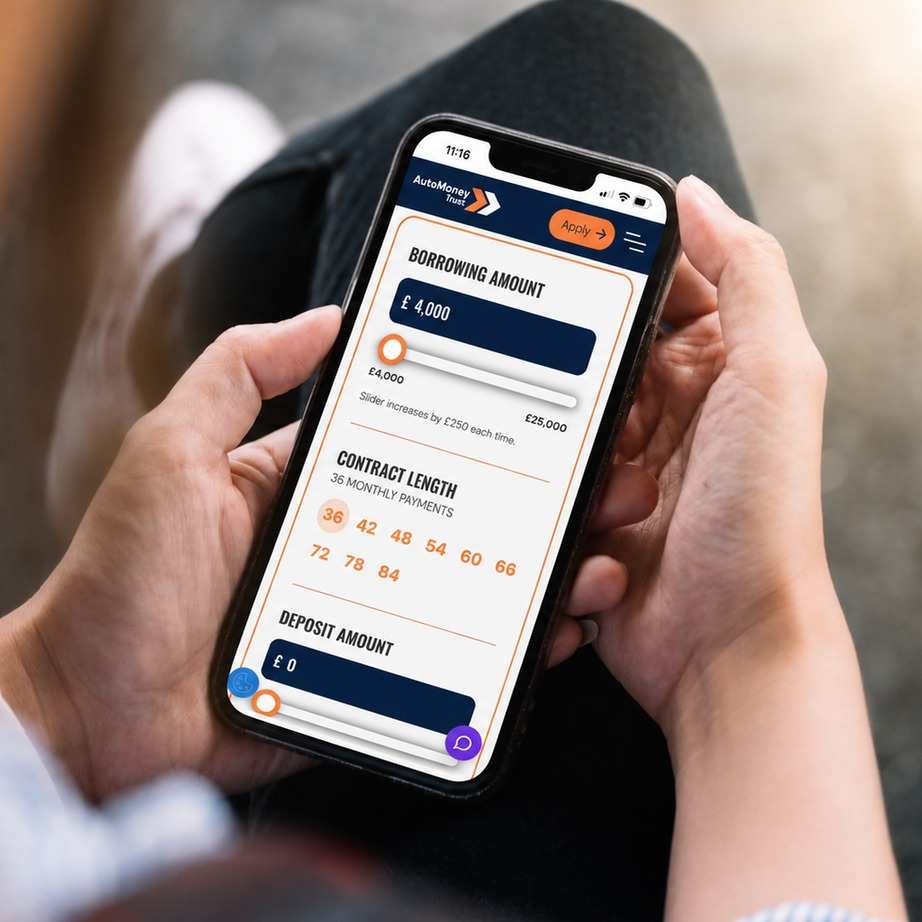
Find a payment that fits your budget by calculating your monthly car payments.
Use our free hire purchase calculator to estimate your monthly repayments before you apply. Enter a loan amount between £4,000 and £25,000 and a term between 36 and 84 months to see what your payment could look like. The calculator uses a representative APR and gives you an indicative figure, your actual rate will be confirmed when you apply. Checking with the calculator does not affect your credit file.
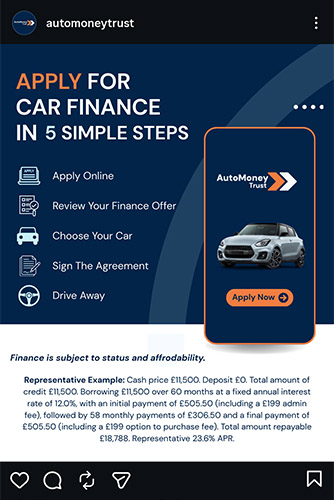
Applying for HP car finance with AutoMoney Trust takes a few minutes online. Here is what happens from your first application to driving away.
HOW IT WORKS

Complete our quick car finance application online. Tell us your income, outgoings and the car you'd like to finance.

We'll review your application and come back with your car finance options. A soft search means no impact on your credit score.

Browse vehicles through our trusted network of UK car dealers and pick the right car for your budget.

Review your HP car finance agreement and sign online in minutes.

We pay the dealer directly, so you can collect your car and drive away.

No impact on your credit file.
Fill in our short online form with your details and we will come back to you with a decision. The initial check is a soft search so will not affect your credit score. If approved, you will see your monthly payment, total amount payable, and APR before you commit to anything. Finance is subject to status and affordability. Over 18s only.
AutoMoney Trust works with established finance brokers and dealer partners across the UK. These partnerships help us support more customers with clear, responsible hire purchase car finance options, while giving introducers access to a lender focused on communication, relationship management and practical application support.
Planning a road trip through Europe? If your car is on HP finance, you'll need your lender's permission before taking it abroad. It's a good idea to apply in advance, so there's plenty of time to arrange the necessary documents and check your insurance and breakdown cover before you travel.
If you’ve taken out car finance, like HP or PCP, you might be wondering whether someone else can drive the car. It’s a common question, especially if you share driving with a partner, family member, or friend. The answer depends on your finance agreement and your insurance.
Having your car stolen is upsetting and even more confusing if you’re still paying it off through car finance. You might wonder who’s responsible, whether you still have to make payments, or what your insurance covers.
Buying a used car on finance is common, but what if the car you're looking at still has finance owing on it? If the previous owner hasn’t cleared their finance, it can create big problems for you as the buyer. This guide explains the risks, how to check for outstanding finance, and what to do if you’ve already bought a car with it.
If your PCP agreement is ending soon, you may be wondering how to pay the final balloon payment. While some drivers choose to pay it in full or return the vehicle, refinancing can offer another way to keep the car by spreading the cost over time. This guide explains how balloon payment refinancing works, what to consider before applying, and the alternatives available.
Our car finance guides are here to help you understand your options. Whether you're new to car finance or just want to learn more, you'll find useful information about how car finance works, what Hire Purchase means, your rights under the agreement and what to think about before making an application.
Don't just take our word for it. We've helped over 10,000 people across the UK get behind the wheel with straightforward, affordable car finance. Find out what our customers think about their experience with us.
Automoney Trust have been amazing! From start to finish, they provided excellent service! Mo has been excellent and is a credit to the company! Nothing was too much and went out of his way to ensure everything went through in a timely manner and made sure me as a customer was happy! Thank you once again! 🙏🏽
Everyone from Auto lend has gone out if their way to make my dreams come true. They don't normally lend on fully electric vehicles but taking my circumstances into account made it happen. Mo was amazing keeping me informed all the way. Highly recommend them.
Great company very helpful and friendly. Willing to listen and help if you experience any difficulties. My account manager Paul Owen was very helpful, polite and courteous. The whole process was very quick and I was able to secure a vehicle I initially thought was out of my price bracket.
Matt helped me from day 1 with some issues with my vehicle, he went above and beyond just finance issues with help with financing repairs to my car. From day 1 I felt like he cared about my concerns and did his best to get everything sorted. Thanks to Matt and the team at Auto money trust I would recommend them to anyone looking for vehicle finance. 5* service!
Brilliant setting up but if you ever have a month of financial difficulties, they couldnt care less, they will NOT help you whatsoever. Vultures Avoid and go with a responsible company, they forced me to get a payday loan under threat of destroying my creditfile.
Keep up with the latest from AutoMoney Trust. Tips on car finance, what to look for when buying a used car, and updates from the team.
Norfolk Capital Group is a group of specialist finance businesses working together to provide clear, responsible lending solutions across the UK. We focus on making finance straightforward, transparent and tailored to individual needs, whether for personal, vehicle or commercial purposes.
Our group includes Commercial Trust, The Loans Engine, AutoMoney Trust, Mercantile Trust and Norwich Trust. Each business offers its own area of expertise, but all share the same commitment to fair, responsible lending and good customer outcomes.
Learn more about the Norfolk capital group





Got a question about car finance? Here are answers to the ones we get asked most often. If you cannot find what you are looking for, visit our full FAQ page or get in touch with the team.
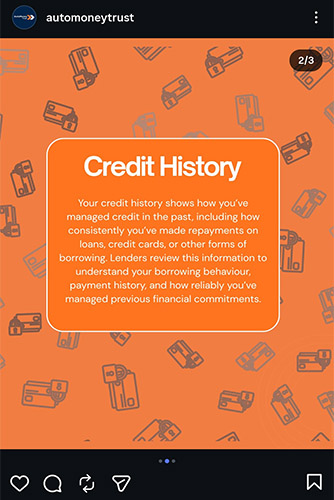
Car finance can affect your credit score positively or negatively depending on how you manage your agreement. Making regular, on-time payments can help build a positive credit history and demonstrate responsible borrowing, while late or missed payments can negatively affect your credit score and make it more difficult or expensive to access credit in the future.
If payments are not made on time, they may be reported to credit reference agencies, which can lower your credit score and make future borrowing more difficult or potentially more expensive.
A lender may carry out a hard credit search when you apply. Other lenders can see it on your credit report, and it may affect your score. Several hard searches close together may affect how lenders assess you.
For more information about how applications are assessed, read our guide on Credit Checks for Car Finance.
AutoMoney Trust offers a fixed interest rate, so your rate will not rise during the agreement. Your payment schedule is agreed at the start. The first or final payment may be different if it includes a fee, so check the full schedule when planning your budget. With a variable interest rate, the rate and payments may change. Compare the APR, payment schedule and total amount payable before deciding.
With an AutoMoney Trust hire purchase agreement, legal ownership of the car transfers to you only after you have made all of your monthly payments and paid the £10 option to purchase fee at the end of the agreement. Until then, the vehicle remains the property of AutoMoney Trust.
Although you won't legally own the car during the finance term, you are responsible for its day-to-day running costs, including vehicle tax, insurance, MOT, servicing, and maintenance. As the finance provider owns the vehicle until the agreement is complete, you cannot normally sell, transfer ownership of, or make significant modifications to the car without our permission.
It is also important to keep up with your car finance payments, as missed payments could lead to arrears and, in some circumstances, the vehicle may be at risk of repossession if the agreement is not brought back up to date.
Once you have made your final monthly payment and paid the option to purchase fee, legal ownership transfers to you, and the car becomes fully yours with no further finance obligations.
Continued missed payments can lead to arrears, damage your credit file and, in some circumstances, repossession of the vehicle.
If you fall behind on your car finance payments, AutoMoney Trust will contact you to understand your situation and discuss the support available. If you are struggling to maintain your payments, it is important to get in touch as early as possible, as we may be able to help you understand your options and prevent your account from falling further into arrears.
Ongoing missed payments may result in default interest, reminder letter fees, and information being reported to credit reference agencies. A record of missed payments could remain on your credit file for up to six years, which may affect your ability to obtain credit in the future.
If car finance arrears remain unresolved, your hire purchase agreement may be terminated and steps may be taken to recover the vehicle. However, under UK law, if you have paid at least one-third of the total amount payable under your agreement, a court order is generally required before the vehicle can be repossessed.
If the vehicle is repossessed and sold, you may still be responsible for any remaining balance if the sale proceeds do not cover the amount outstanding on your car finance agreement.
If you are experiencing financial difficulties, please contact AutoMoney Trust as soon as possible. You can also visit our Existing Customers page for more information.
Yes, your car is likely to lose value during the finance agreement. Most cars depreciate over time, meaning they gradually lose value as they age. For most used cars, depreciation continues throughout a Hire Purchase agreement, so the vehicle is typically worth less at the end of the finance term than when it was purchased.
Depreciation is important because the total amount payable on a car finance agreement includes the amount borrowed, interest, and any applicable fees. As a result, the total amount you repay over the agreement may be higher than the vehicle's market value by the time your finance ends.
Depreciation can also increase the risk of negative equity. If you decide to settle your car finance early or sell the vehicle before your agreement has ended, the car's current market value may be lower than the outstanding finance balance. In this situation, you may need to pay the difference before the agreement can be settled.
The rate at which a car depreciates depends on several factors, including its age, mileage, condition, service history, brand, model, and market demand. Keeping your vehicle well maintained and within reasonable mileage can help preserve its value over time, although depreciation cannot be avoided completely.
Some drivers also choose to take out GAP insurance, which may help cover the difference between an insurer's payout if the vehicle is written off and the remaining balance on the car finance agreement. This can provide additional financial protection particularly during the earlier years of a hire purchase agreement, when the outstanding finance may be higher than the vehicle's market value. GAP insurance is optional and subject to policy exclusions and limits.